
Marlow and the Crew
Heart of DarknessThis flow follows the crew’s exposure to danger, hunger, and colonial hierarchy during the river voyage.
increasing Bearing strength in each event
 decreasing
Bearing strength in each eventdecreasingA Crew Assembled
Working Together
Recruited Hands
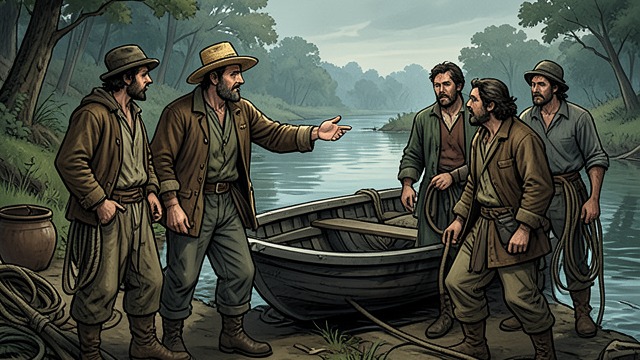
Marlow assembled African crew members to operate the steamer. Their skill and endurance made the voyage possible despite the vessel’s poor condition.
Unequal Conditions
The crew’s contract and provisions offered little security. Their wages in brass wire were of limited value when the steamer seldom stopped at villages.
Dependence Across Hierarchy
Marlow relied on people whom the Company’s structure treated as subordinate. Practical cooperation created a relationship more substantial than the official arrangement acknowledged.
Hunger on the River
Restraint Under Need
Meagre Provisions
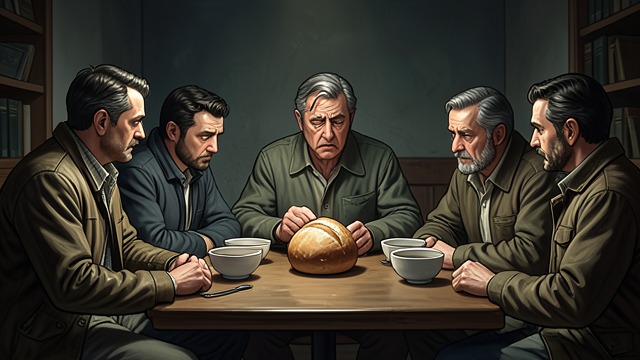
The crew had little to eat beyond small portions of poor food. Their hunger increased as the steamer pressed deeper into a region with few opportunities to trade.
An Unequal Arrangement
They received brass wire as wages, but there were often no villages where it could buy food. The system paid regularly without ensuring that payment could meet need.
Marlow’s Recognition
Marlow wondered why the hungry men did not attack the whites aboard. Their restraint became, to him, a profound human fact rather than proof of inferiority.
The Fogside Encounter
Different Readings of Danger
White Alarm
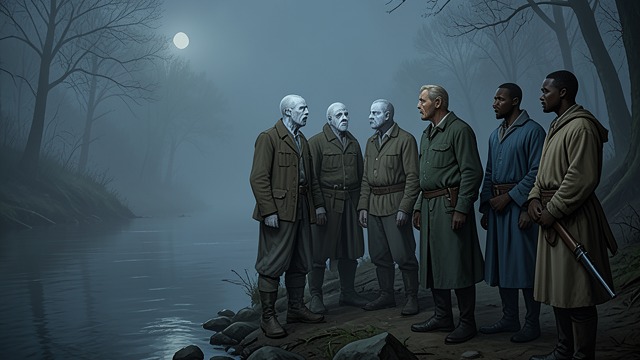
The white passengers heard the cries through the fog and feared an attack. They responded with panic before they could see who was nearby.
Crew Composure
The African crew appeared alert and comparatively calm. Their headman spoke with Marlow about the possibility of eating an attacker, revealing the severity of their hunger.
Mutual Misreading
The scene unsettled the assumptions of the pilgrims and Marlow alike. It showed how differences in experience and need could produce sharply different readings of the same danger.
The Helmsman’s Death
Violence on Deck
The Attack Begins
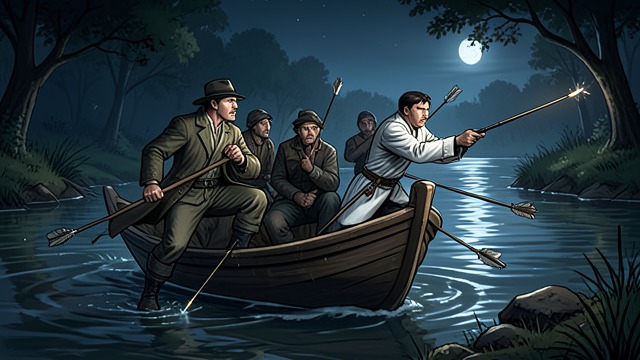
Arrows struck the vessel as hidden people fired from the bank. The crew and pilgrims faced immediate danger in a passage that left little room to manoeuvre.
A Fatal Wound
The helmsman fired toward shore and was struck by a spear. Marlow had to choose between tending him and keeping the damaged steamer under control.
Loss Within Partnership
The helmsman’s death revealed the human cost of the voyage to Marlow. Their working connection could not shield him from a conflict others described in abstract terms.
A Farewell at Sea
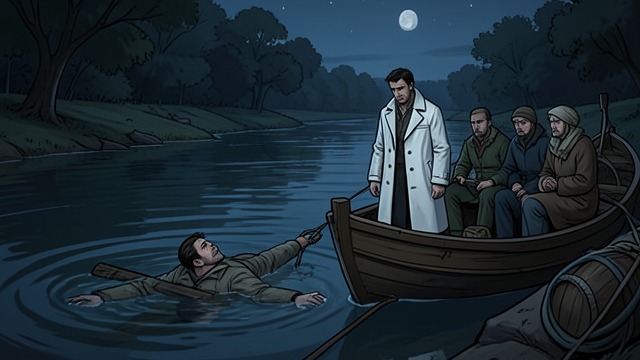
A Body Returned to the River
Immediate Burial
Marlow disposed of the helmsman’s body in the river after the attack. The pilgrims objected to the speed of the act, while the crew’s hunger made delay dangerous.
A Difficult Decision
Marlow did not want the body eaten by the crew. He chose a river burial, a decision shaped by both urgency and his concern for what might happen next.
Memory Beyond Utility
Later, Marlow regretted the loss and remembered the helmsman’s final gaze. The man whom the voyage had made an instrument of work remained in memory as a partner and fellow human being.
Before the steamer’s upstream journey
During the long upstream passage
During the morning fog near the Inner Station
During the attack near the Inner Station
Minutes after the helmsman’s death
